
About Zembrace® SymTouch®
Delivers the thinnest needle
combined with the lowest
available dose of sumatriptan
in a subcutaneous auto‑injector1,2
Jump to:
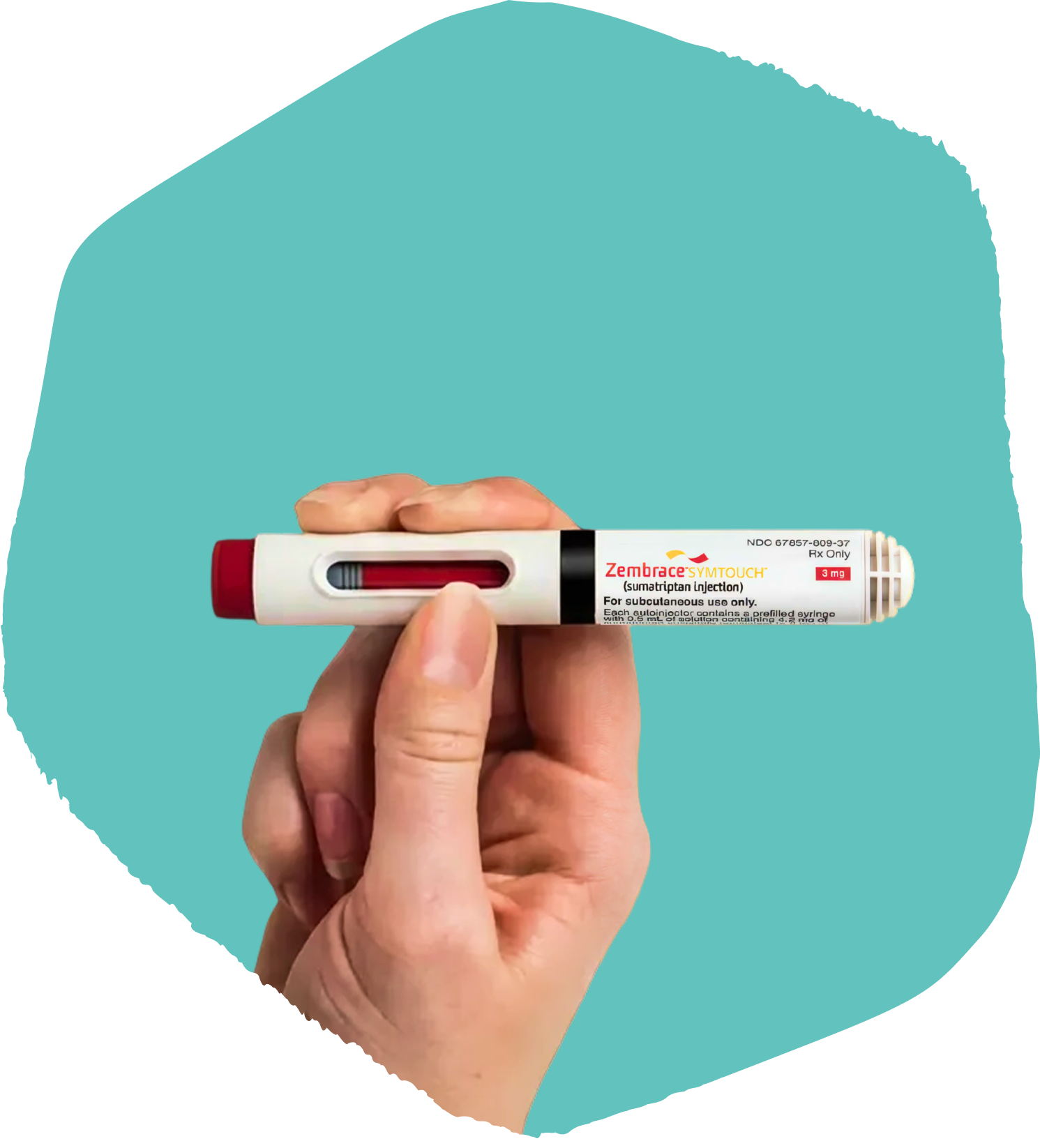
Not actual size.

Dosing and Administration

Not actual size.
Dosing and Administration
Subcutaneous delivery with no assembly required1


Administration Considerations: The recommended dose of ZEMBRACE SYMTOUCH is 3 mg injected subcutaneously. The maximum cumulative dose that may be given in 24 hours is 12 mg, with doses separated by at least 1 hour. Do not administer by any other route. Instruct patients on the proper use of ZEMBRACE SYMTOUCH and direct them to use injection sites with an adequate skin and subcutaneous thickness to accommodate the length of the needle.1
Refer to the Instructions for Use.

Clinical Data
Delivered meaningful pain freedom at 2 hours1
In a clinical trial, 46% of patients met the primary endpoint of pain freedom at 2 hours (vs 27% with placebo)1*†
*Study Design: Randomized, double-blind, placebo‑controlled clinical trial of 230 adult patients with migraine with or without aura who received either ZEMBRACE SYMTOUCH (N=111) or placebo (N=119) for a single migraine attack. The primary endpoint was the proportion of patients who were pain-free 2 hours after the first dose.1
†Pain freedom was defined as a reduction from pre‑dose moderate (Grade 2) or severe (Grade 3) pain to none (Grade 0).1
Pain Freedom at 2 hours


ZEMBRACE SYMTOUCH is bioequivalent to another sumatriptan 3 mg subcutaneous
injection that has also shown1:

Robust migraine
relief at 2 hoursठ(reported by 60% of patients vs 21% for placebo)1

Rapid migraine relief
at 10 minutesठ(reported by 17% of patients vs 5% for placebo)1
‡Study Design: Randomized, double-blind, single-attack, placebo‑controlled trial, where six different doses of sumatriptan injection, including 3 mg, were compared (n=30 in each group) with placebo (n=62). Migraine relief was evaluated at 10 and 30 minutes; and 1 and 2 hours after dose.1
§Relief is defined as the reduction of moderate or severe pain to no or mild pain after dosing without use of rescue medication.1
Safety
ZEMBRACE SYMTOUCH (sumatriptan injection) demonstrated an established safety profile.1,3
The most common adverse reactions (≥5% and >placebo) in sumatriptan injection (6 mg) were injection site reactions, tingling, dizziness/vertigo, warm/hot sensation, burning sensation, feeling of heaviness, pressure sensation, flushing, feeling of tightness, and numbness/paresthesia. The adverse reactions with ZEMBRACE SYMTOUCH are expected to be similar to those observed with sumatriptan injection.1
Study Design: Multicenter, randomized, double-blind, placebo‑controlled clinical trial for the acute treatment of adults (N=268) with episodic migraine. The primary endpoint was the proportion of patients taking ZEMBRACE SYMTOUCH (N=111) who were pain-free at 2 hours postdose compared with placebo (N=119). The safety endpoint in this study was the proportion of subjects with treatment-emergent AEs (TEAEs), which included injection site reactions, and triptan-related AEs.4
Overall treatment-emergent adverse events occurring in at least 2 subjects4,5
| Zembrace SymTouch (N=111), n | Placebo (N=119), n | |
|---|---|---|
| Subjects with ≥1 TEAE | 37 (33.3%) | 16 (13.4%) |
| Subjects with ≥1 injection site reaction | 26 (23.4%) | 14 (11.8%) |
| Injection site pain | 8 (7.2%) | 7 (5.9%) |
| Injection site swelling | 8 (7.2%) | 1 (0.8%) |
| Injection site bruising | 5 (4.5%) | 3 (2.5%) |
| Injection site irritation | 4 (3.6%) | 3 (2.5%) |
| Injection site erythema | 2 (1.8%) | 1 (0.8%) |
| Injection site induration | 2 (1.8%) | 0 (0.0%) |
| Subjects with ≥1 triptan-related AE | 8 (7.2%) | 3 (2.5%) |
| Palpitations | 0 (0.0%) | 1 (0.8%) |
| Nausea | 2 (1.8%) | 0 (0.0%) |
| Chest discomfort | 1 (0.9%) | 2 (1.7%) |
| Dizziness | 1 (0.9%) | 0 (0.0%) |
| Lethargy | 1 (0.9%) | 0 (0.0%) |
| Paresthesia | 3 (2.7%) | 0 (0.0%) |
| Dyspnea | 0 (0.0%) | 1 (0.8%) |
| Throat irritation | 1 (0.9%) | 0 (0.0%) |
| Throat tightness | 2 (1.8%) | 0 (0.0%) |
More than 90% of patients reported no triptan-related adverse events4,5
References: 1. Zembrace® SymTouch® (sumatriptan succinate) [prescribing information]. Berkeley Heights, NJ: Tonix Medicines, Inc.; 2023. 2. Andre AD, Brand-Schieber E, Ramirez M, Munjal S, Kumar R. Subcutaneous sumatriptan delivery devices: comparative ease of use and preference among migraineurs. Patient Prefer Adherence. 2017;11:121-129. doi:10.2147/PPA.S125137 3. Brar Y. Sumatriptan. StatPearls. Published online November 2023. https://www.ncbi.nlm.nih.gov/books/NBK470206/ 4. Landy S, Munjal S, Brand-Schieber E, Rapoport AM. Efficacy and safety of DFN-11 (sumatriptan injection, 3 mg) in adults with episodic migraine: a multicenter, randomized, double-blind, placebo‑controlled study. J Headache Pain. 2018;19(1):69. doi:10.1186/s10194-018-0881-z 5. Landy S, Munjal S, Brand-Schieber E, Rapoport AM. Efficacy and safety of DFN-11 (sumatriptan injection, 3 mg) in adults with episodic migraine: an 8-week open-label extension study. J Headache Pain. 2018;19(1):70. doi:10.1186/s10194-018-0882-y
INDICATION/LIMITATIONS OF USE
ZEMBRACE® SymTouch® (sumatriptan succinate) injection and TOSYMRA® (sumatriptan) nasal spray are indicated for the acute treatment of migraine with or without aura in adults. ZEMBRACE SymTouch or TOSYMRA should only be used where a clear diagnosis of migraine has been established. ZEMBRACE SymTouch and TOSYMRA are not indicated for the prevention of migraine attacks or for the treatment of cluster headache.
IMPORTANT SAFETY INFORMATION
ZEMBRACE SymTouch and TOSYMRA are contraindicated in patients with:
- Ischemic coronary artery disease (CAD) or coronary artery vasospasm, including Prinzmetal's angina
- Wolff-Parkinson-White syndrome or arrhythmias associated with other cardiac accessory conduction pathway disorders
- History of stroke, transient ischemic attack (TIA), or hemiplegic or basilar migraine
- Peripheral vascular disease
- Ischemic bowel disease
- Uncontrolled hypertension
- Recent (ie, within 24 hours) use of ergotamine-containing or ergot-type medication, or another 5-hydroxytryptamine1 (5-HT1) agonist
- Concurrent or recent (within 2 weeks) use of a monoamine oxidase-A (MAO-A) inhibitor
- Hypersensitivity to sumatriptan (angioedema and anaphylaxis seen)
- Severe hepatic impairment
WARNINGS AND PRECAUTIONS
- Myocardial ischemia/infarction, Prinzmetal's angina: These events may occur even in patients without known cardiovascular disease. Perform cardiac evaluation in triptan-naive patients with multiple risk factors and, if satisfactory, administer the first dose of ZEMBRACE SymTouch or TOSYMRA in a medically supervised setting
- Arrhythmias: Life-threatening disturbances of cardiac rhythm, including ventricular tachycardia and ventricular fibrillation leading to death, have been reported within a few hours following the administration of 5-HT1 agonists. Discontinue ZEMBRACE SymTouch or TOSYMRA if these disturbances occur
- Sensations of chest/throat/neck/jaw pain, tightness, pressure, or heaviness: Commonly occur after treatment with 5-HT1 agonists and are usually noncardiac in origin. Perform a cardiac evaluation in patients with cardiac risk
- Cerebrovascular events: Cerebral hemorrhage, subarachnoid hemorrhage, and stroke have occurred in patients treated with 5-HT1 agonists, and some have resulted in fatalities. Discontinue ZEMBRACE SymTouch or TOSYMRA if a cerebrovascular event occurs. Before treating headaches in patients not previously diagnosed with migraine or in patients who present with atypical symptoms, exclude other potentially serious neurological conditions
- Other vasospasm reactions: 5-HT1 agonists, including ZEMBRACE SymTouch and TOSYMRA, may cause noncoronary vasospastic reactions, such as peripheral vascular ischemia, gastrointestinal vascular ischemia and infarction, splenic infarction, and Raynaud's syndrome. In patients who experience symptoms or signs suggestive of a vasospastic reaction following the use of any 5-HT1 agonist, rule out a vasospastic reaction before using ZEMBRACE SymTouch or TOSYMRA
- Medication overuse headache: Overuse of acute migraine drugs may lead to exacerbation headache (medication overuse headache). Detoxification of patients, including withdrawal of the overused drugs and treatment of withdrawal symptoms, may be necessary
- Serotonin syndrome: May occur with triptans, including ZEMBRACE SymTouch and TOSYMRA, particularly during co-administration with selective serotonin reuptake inhibitors (SSRIs), serotonin norepinephrine reuptake inhibitors (SNRIs), tricyclic antidepressants (TCAs), and MAO inhibitors. The onset of symptoms usually occurs within minutes to hours of receiving a new or greater dose of a serotonergic medication. Discontinue ZEMBRACE SymTouch or TOSYMRA if serotonin syndrome is suspected
- Increase in blood pressure: Significant elevation in blood pressure, including hypertensive crisis with acute impairment of organ systems, has been reported in patients treated with 5-HT1 agonists. Monitor blood pressure in patients treated with ZEMBRACE SymTouch or TOSYMRA
- Hypersensitivity reactions: Hypersensitivity reactions, including angioedema and anaphylaxis, have occurred in patients receiving sumatriptan. Such reactions can be life threatening or fatal. ZEMBRACE SymTouch and TOSYMRA are contraindicated in patients with a history of hypersensitivity reaction to sumatriptan
- Seizures: Seizures have been reported following administration of sumatriptan, with or without predisposing factors. ZEMBRACE SymTouch or TOSYMRA should be used with caution in patients with a history of epilepsy or conditions associated with a lowered seizure threshold
- Local irritation: For TOSYMRA nasal spray only, local irritative symptoms were reported in approximately 46% of patients with TOSYMRA in an open-label trial that allowed repeated use of TOSYMRA over the course of 6 months. The most common local irritative symptoms were application site reaction (eg, burning sensations in the nose), dysgeusia, and throat irritation. Approximately 0.5% of the cases were reported as severe
ADVERSE REACTIONS
The most common adverse reactions (≥5% and >placebo) were injection site reactions (for ZEMBRACE SymTouch only), tingling, dizziness/vertigo, warm/hot sensation, burning sensation, feeling of heaviness, pressure sensation, flushing, feeling of tightness, and numbness/paresthesia.
For TOSYMRA nasal spray only, in an open-label study allowing repeated use of TOSYMRA over 6 months, 46% of patients reported local irritative symptoms, the most common of which were application site reaction, dysgeusia, and throat irritation.
DRUG INTERACTIONS
- Ergot-containing drugs: Reported to cause prolonged vasoplastic reactions
- MAO-A inhibitors: Increase systemic exposure by 2-fold
- Other 5-HT1 agonists: Vasoplastic effects may be additive
- SSRIs, SNRIs, TCAs, and MAO inhibitors: Serotonin syndrome has been reported
USE IN SPECIFIC POPULATIONS
Pregnancy: Disease-Associated Maternal and/or Embryo/Fetal Risk: Several studies have suggested that women with migraine may be at increased risk of preeclampsia during pregnancy.
Lactation: Sumatriptan is excreted in human milk following subcutaneous administration. There are no data on the effects of sumatriptan on a breastfed infant or the effects on milk production. Infant exposure can be minimized by avoiding breastfeeding for 12 hours after treatment with ZEMBRACE SymTouch or TOSYMRA.
Pediatric use: The safety and effectiveness in pediatric patients have not been established. ZEMBRACE SymTouch or TOSYMRA is not recommended for use in patients younger than 18 years of age.
Geriatric patients: Clinical trials of sumatriptan did not include sufficient numbers of subjects aged 65 and over to determine whether they respond differently from younger patients. Dose selection for an elderly patient should usually start at the low end of the dosing range. A cardiovascular evaluation is recommended for geriatric patients who have other cardiovascular risk factors (eg, diabetes, hypertension, smoking, obesity, strong family history of CAD) prior to receiving ZEMBRACE SymTouch or TOSYMRA.
Please see additional safety information in the full Prescribing Information for ZEMBRACE SymTouch and TOSYMRA.
To report suspected adverse reactions, contact Tonix Medicines, Inc. at 1‑888‑869‑7633, or the FDA at 1‑800‑FDA‑1088 or www.fda.gov/medwatch.
MLT‑HCP‑260015 05/26
MLT‑HCP‑260012 05/26